Premium Basmati Rice Manufacturers in Haryana — What Sets the Best Mills Apart
Haryana produces more GI-certified Basmati rice than any other state in India. The Karnal-Taraori belt specifically has been the epicentre of premium Basmati cultivation for over a century. But not every mill in this region produces the same quality. Here is what separates the ones that have endured from the ones that have not.
Why Haryana — and the Taraori Belt Specifically — Produces the World's Finest Basmati
Basmati rice is geographically specific in a way that few agricultural products are. The same variety planted in a different soil type or climate produces a noticeably different grain. The soil composition, the water source, the temperature range between day and night during the growing season — all of these factors influence aroma compound development, grain structure, and elongation potential.
The Taraori belt in Karnal, Haryana sits at an altitude of approximately 250 metres above sea level. The soil is loamy and well-drained, with a specific mineral composition that the Basmati plant has adapted to over generations. The Yamuna canal system provides consistent, clean irrigation. The temperature differential between June nights and October harvest mornings — crossing 15 to 18 degrees Celsius on some days — is one of the factors that drives aroma compound accumulation in the developing grain.
This is not simply tradition. It is agricultural science that the Indian government formally recognised with a Geographical Indication certification covering the specific belt of land across Haryana, Punjab, Uttarakhand, and parts of UP that can legally be designated as Basmati-producing regions. Within that certified zone, Karnal-Taraori is the premium address.
What Separates a Premium Mill from a Commodity Processor
The Basmati supply chain is longer and more layered than most buyers realise. Between the farmer who grows the paddy and the consumer who opens the bag, there are typically a procurement agent, a milling facility, a packaging operation, and a distribution network. A premium miller participates directly in the earliest stages of this chain.
Here are five criteria that distinguish premium Basmati mills from commodity processors:
1. Direct Farmer Procurement
Premium mills buy paddy directly from farming families they have worked with for years — often decades. This gives them access to the best lots from each harvest before they reach the open market. It also gives them honest intelligence about growing conditions that season-by-season open market purchases cannot provide. A mill that buys on the spot market has no way to know what happened to the paddy before it arrived.
2. On-Site Aging Infrastructure
Genuine aging requires physical infrastructure: large, ventilated warehouse space, jute storage bags that allow the grain to breathe, humidity and temperature monitoring systems, and the working capital to carry 12 to 18 months of paddy inventory off the market. Mills that skip aging or abbreviate it do so because the infrastructure cost and capital requirements are prohibitive. This is why many brands claim aging on the label but cannot specify the period or show the facility.
3. Modern Milling with Quality Sorting
After aging, the paddy goes through de-husking, whitening, and grading. Premium mills use multi-stage colour sorters — sortex machines — that identify and remove broken grains, discoloured grains, and foreign material before packaging. The percentage of broken grain in the final output is a direct quality indicator: below 2% is the premium standard. Above 5% indicates volume-over-quality processing decisions.
4. Moisture Testing at Intake
The moisture content of paddy at the point of intake determines whether aging will work correctly. Paddy received above 13.5% moisture requires additional drying before storage, which can affect aroma development. Premium mills test moisture at intake and reject or quarantine lots that fall outside specification rather than processing them immediately.
5. Export Certification and Documentation
Mills that supply international markets are required to maintain APEDA export certification, phytosanitary documentation, and pesticide residue testing records. These compliance requirements are rigorous and expensive to maintain — but they also enforce quality standards on the domestic product. A mill that exports premium rice to 15 countries operates to a specification that is externally verified, not just internally claimed.
The Role of the Karnal Terroir in Basmati Quality
The term "terroir" is most commonly associated with wine, but it applies equally to Basmati rice. The specific combination of soil, water, climate, and traditional cultivation practices in the Karnal region produces a grain that cannot be replicated elsewhere simply by planting the same variety.
Karnal lies in the Indo-Gangetic Plain at a latitude that gives it long, warm growing seasons with significant temperature variation between day and night during the grain-filling phase in September and October. This thermal variation is directly associated with the accumulation of 2-acetyl-1-pyrroline — the primary aromatic compound responsible for Basmati's fragrance. Research from the Directorate of Wheat Research in Karnal has documented this relationship between nocturnal temperature drop and aroma compound concentration in GI-certified Basmati.
In practical terms, this means Karnal-origin Basmati has a natural aromatic advantage that no processing technique can replicate in rice grown outside the certified zone.
Quality Certifications to Look For When Sourcing Basmati from India
If you are sourcing Basmati rice at a commercial or wholesale scale, the following certifications and documentation should be standard requirements from any supplier you consider:
- APEDA Export Registration: Mandatory for any Indian rice exporter. Confirms the business is registered with the Agricultural and Processed Food Products Export Development Authority.
- Phytosanitary Certificate: Issued by the Plant Quarantine Authority, confirms the consignment is free from pests and plant diseases.
- Pesticide Residue Test Report: Particularly important for GCC, EU, and US markets where MRL (maximum residue limit) standards are enforced at port. Request this per-batch, not per-mill.
- GI Certification: Confirms the rice originates from within the legally designated Basmati-producing region.
- Quality Assurance Documentation: Moisture content at milling, broken grain percentage, and elongation test results should be available per batch from any premium supplier.
How Double Chabi Has Operated from Karnal Since the 1950s
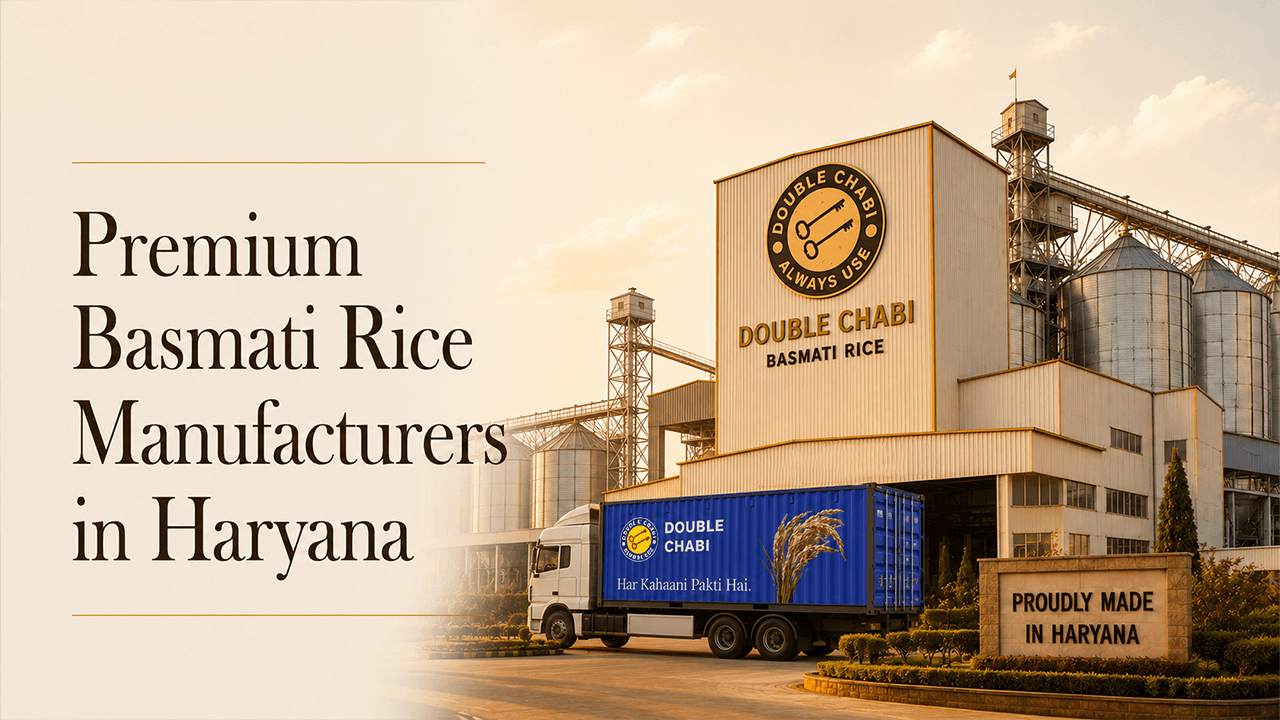
Double Chabi's mill is located in Kurak, Taraori — within the Karnal district that has defined premium Basmati production for over a century. The operation was established in the early 1950s by Late Shri Kashmiri Lal, who recognised that the Taraori belt's specific agricultural conditions, combined with proper aging and careful milling, produced a rice that commanded recognition in both domestic and international markets.
Three generations later, the same commitment to direct farmer procurement, on-site aging, and quality-first milling remains the operating principle. Brij Bhushan Goyal and Jitender Goyal, the second-generation owners, expanded the facility's processing capacity and export reach. The third generation — Pushkar Goyal and Akshat Goyal — has extended the brand into digital commerce and quick commerce channels while maintaining the operational standards established by the founding generation.
Export Credentials and Global Market Presence
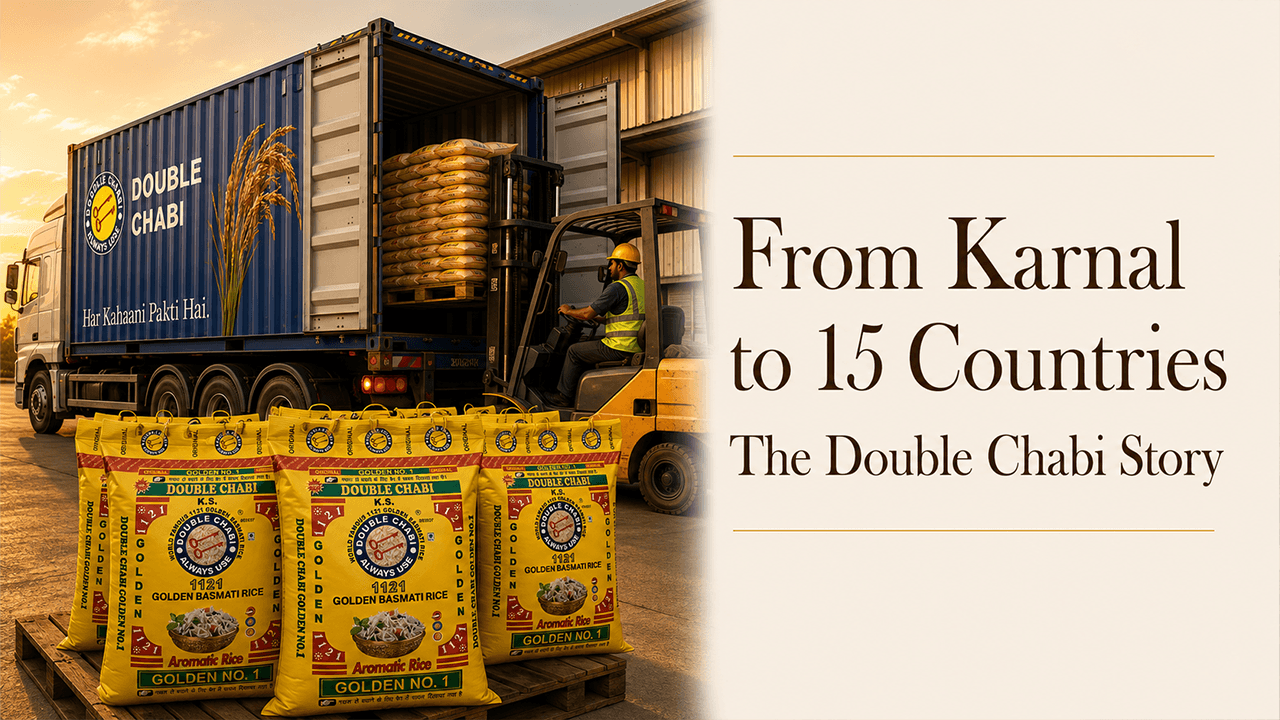
Double Chabi Basmati is currently exported to over 15 countries, including markets across the GCC, Southeast Asia, and Europe. The export operation is APEDA certified and maintains all required documentation for international trade.
For wholesale or export inquiries, contact the Double Chabi team through doublechabirice.com/contact. The team will provide full certification documentation, per-batch quality reports, and pricing for bulk orders on request.
Frequently Asked Questions
- Which state in India produces the best Basmati rice?
- Haryana is widely recognised as producing the highest-quality GI-certified Basmati rice, specifically from the Karnal-Taraori belt. The region's soil composition, water source, and climate — particularly the significant temperature variation during the grain-filling phase — produce a grain with exceptional aroma, elongation, and texture.
- What is a GI certification for Basmati rice?
- GI (Geographical Indication) certification for Basmati rice confirms that the rice originates from within a legally defined geographic zone in India — covering specific districts in Haryana, Punjab, Uttarakhand, and parts of UP — where the soil and climate conditions produce the characteristics that define authentic Basmati.
- How do I find a reliable Basmati rice supplier in India?
- Look for APEDA-registered exporters with verifiable GI certification, per-batch pesticide residue testing documentation, and specified aging periods. Direct mills — as opposed to trading companies that buy and re-brand — typically offer more consistent quality and better traceability.
- Does Double Chabi supply wholesale and bulk orders?
- Yes. Double Chabi supplies wholesale and bulk orders domestically and internationally. Contact the team through doublechabirice.com for pricing, minimum order quantities, and full certification documentation.