
W
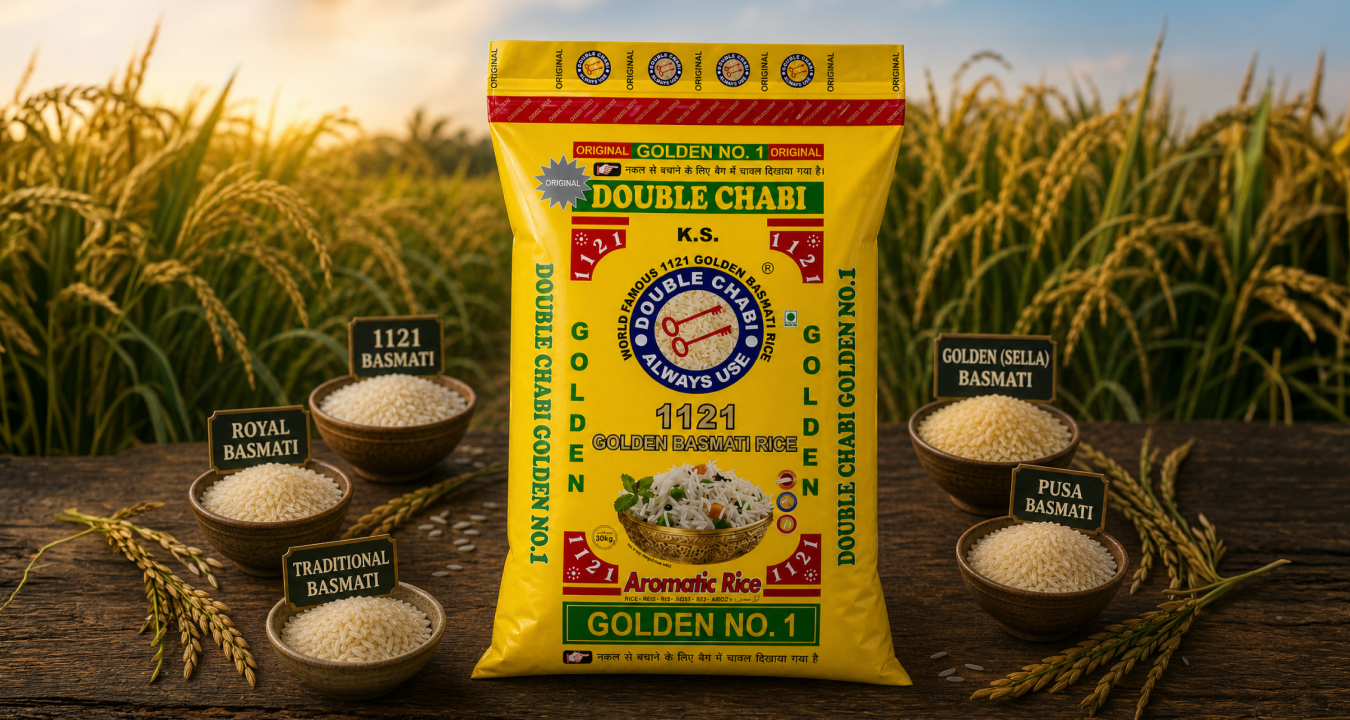
alk down the Basmati aisle of an Indian supermarket and you will see ten variations of the same word. 1121. Pusa. Royal. Sella. Golden. XXXL. Most of these terms describe the same crop, but in slightly different ways. This is the guide that explains all of them.
Buying Basmati can feel like buying wine. There are dozens of names, most of them unhelpful, and every brand uses the language slightly differently. The names actually matter, but they do not mean what most people assume they mean. Some refer to the variety of paddy grown in the field. Others refer to the way the rice is processed after harvesting. A few are pure marketing.
What follows is a working consumer’s guide to the labels you are most likely to see, what they actually mean, and which one belongs in which dish.
1121 is the name of a Basmati variety developed and released by the Indian Agricultural Research Institute. It was bred for export markets, specifically because it has the longest grain length of any commercially viable Basmati variety. A cooked grain of 1121 Basmati can stretch beyond twenty millimetres, which is roughly twice the length of an ordinary long-grain rice grain.
When a brand markets its rice as XXXL or Extra Long Grain, it is almost always 1121. When you see a Basmati pack that emphasises grain length in the photograph, it is 1121. When a Saudi import buyer asks for the longest grain available, they are asking for 1121.
1121 is the workhorse of premium Basmati. It elongates dramatically when cooked, which is exactly what a biryani needs. It separates cleanly. It carries flavour beautifully. It is the variety most likely to deliver what a consumer expects from premium Basmati.
Royal Basmati is not a variety. It is a category label that brands use for their highest-tier Basmati offering. Different brands use Royal to mean different things. For one brand, Royal means 1121 aged for eighteen months. For another, it means a blend of long-grain Basmati and shorter Basmati varieties marketed at a premium.
When a label says Royal, the variety inside is usually a long-grain Basmati, often 1121, but the category does not guarantee aging period, grain consistency, or origin. The actual quality lives in the brand’s processing standards, not the word Royal.
If you are buying Royal Basmati, ignore the marketing word and look for two specifics on the back of the pack. First, the country of origin and ideally the district. Second, an explicit mention of aging period. The combination of these two pieces of information tells you what you actually have. The word Royal alone tells you what the brand wants you to think you have.
Golden Basmati, also called Sella Basmati or Parboiled Basmati, refers to a processing technique rather than a variety. The paddy is partially boiled before milling. This forces nutrients from the bran into the grain, hardens the texture, and gives the rice its distinctive yellow-gold colour.
Parboiled Basmati is the preferred rice in much of the Middle East and parts of Africa. It cooks fluffier, holds its shape better in long-cooked dishes, and is less likely to break. Mandi, the Saudi Arabian celebration dish, is traditionally cooked with parboiled Basmati. Many Indian restaurants in the Gulf use it for biryani.
Golden Basmati is not a downgrade or an upgrade. It is a different product. Choose it when you want a grain that holds its texture through long cooking. Choose raw Basmati when you want a fluffier, lighter, and more aromatic finish.
Pusa is a name you may see on cheaper Basmati packs. It refers to a series of Basmati varieties developed at the Indian Agricultural Research Institute campus in Pusa, Delhi. 1121 is itself technically Pusa 1121. The institute has released many Pusa numbered varieties over the decades, each with slightly different characteristics.
Pusa 1718 is rice with strong disease resistance. Pusa 1509 has a shorter cultivation cycle, making it easier on water resources. Pusa 1121 is the long-grain export workhorse. The numbers matter to farmers and traders. For most home buyers, the practical takeaway is simple. If a pack mentions a Pusa variety, the rice is genuine Indian Basmati from a recognised institute, not a generic long-grain marketed as Basmati.
Before the Pusa varieties were developed, Indian farmers grew traditional Basmati strains, sometimes called Dehraduni Basmati or Taraori Basmati. These traditional varieties were tall, less disease-resistant, and gave lower yields per acre. They were also famously aromatic. Some were almost unmatched in fragrance.
Traditional Basmati is now rare. Most farmers have shifted to higher-yielding modern varieties. A small minority of premium brands still produce traditional Basmati for collectors, fine-dining restaurants, and connoisseur markets. If you ever see a label that specifically mentions Taraori Basmati or Traditional Basmati, treat it as a special product. The price will reflect the rarity.
For biryani, the right rice is long-grain raw Basmati, ideally 1121, aged at least twelve months. The grain elongation matters here. The fluffy separation matters here. The fragrance carrying through the spices matters here.
For pulao, slightly shorter and softer Basmati works better. The pulao is gentler than a biryani, and a slightly less aggressive grain handles the lighter cooking better. Pusa varieties or shorter long-grain Basmati work well.
For everyday rice, the question is more about price than perfection. Any genuine Basmati, ideally aged six months or longer, will give you a fragrant and pleasant rice. Look for clean grain, low broken percentage, and a brand that names its origin.
For khichdi, jeera rice, or curd rice, a softer Basmati or a Sella variety often performs better. The dish wants a grain that absorbs flavour and softens. A premium 1121 is overkill, and arguably wasted on a recipe that is not built around grain length.
What is the difference between 1121 and Royal Basmati?
1121 is a specific variety of Basmati paddy known for its extra-long grain. Royal is not a variety. It is a marketing category.
Is Golden Basmati or Sella Basmati the same as parboiled rice?
Yes. Both refer to parboiled Basmati.
Which Basmati is best for biryani?
Long-grain raw Basmati, ideally 1121, aged 12+ months.
Is Pusa Basmati the same as 1121?
1121 is one of several Pusa varieties developed by the Indian Agricultural Research Institute.
